S&P Market Intelligence: What It Does and How to Use It
S and P Market Intelligence is one of the largest financial data and analytics platforms serving institutional investors, corporate strategists, and asset managers. It consolidates company financials, credit ratings, market data, news feeds, and research tools into a single subscription ecosystem. If you're evaluating competitive intelligence platforms or deciding whether to build your own data stack, understanding what S&P Market Intelligence actually delivers – and where it stops – matters. This article explains what the platform includes, who uses it, what it costs, and where purpose-built competitive intelligence tools fill the gaps it leaves for marketers and growth teams.
What S&P Market Intelligence Actually Includes
S and P Market Intelligence is a division of S&P Global, formed from the 2016 merger of SNL Financial and Capital IQ. According to S&P Global’s investor documentation, the platform serves over 35,000 institutional clients including asset managers, banks, corporations, and professional services firms. The product consolidates data across public and private companies, credit instruments, commodities, and macroeconomic indicators.
Core Data Categories
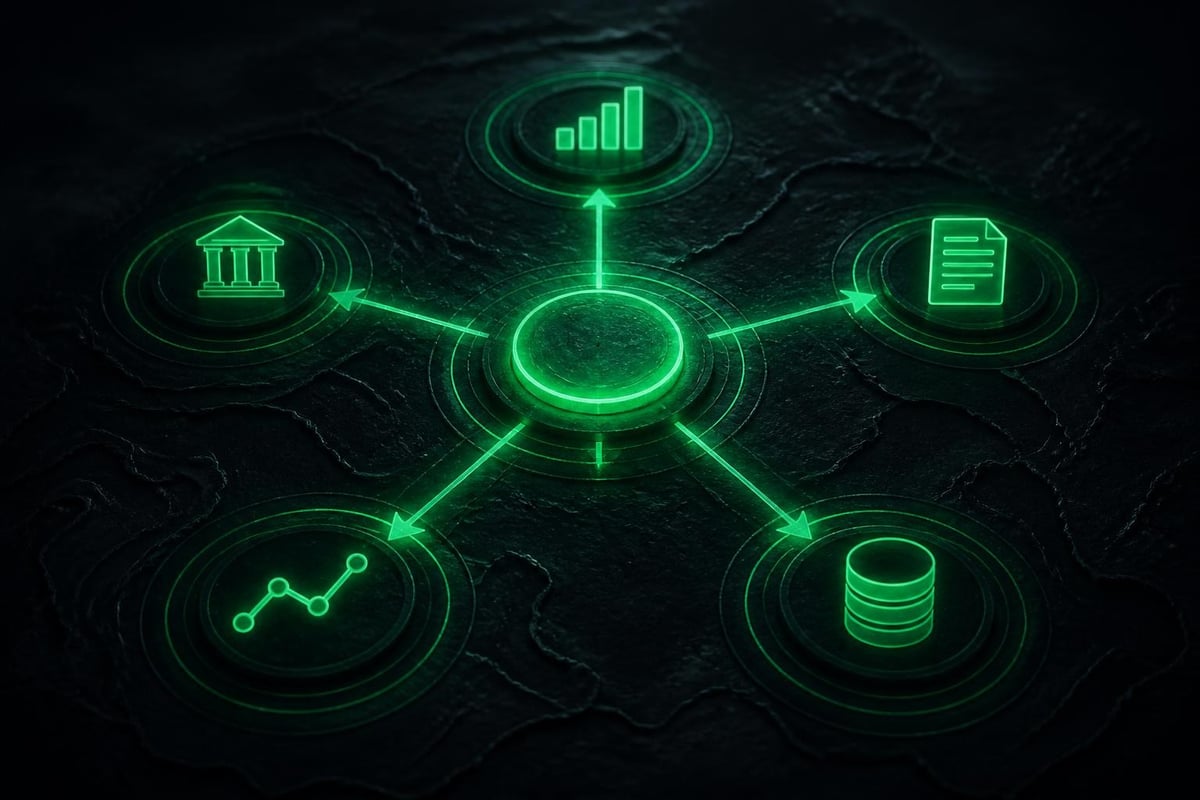
The platform organizes around five primary modules:
- Capital IQ Pro: Company financials, ownership structures, M&A activity, and executive profiles for public and private firms
- Credit Analytics: Bond pricing, credit ratings, default probabilities, and covenant analysis
- Market Intelligence Desktop: Real-time news, filings, transcripts, and market data feeds
- Quantitative Solutions: Factor models, backtesting environments, and portfolio analytics APIs
- Data Management Solutions (DMS): Enterprise data feeds for firms building proprietary systems
Each module requires separate licensing. Most users subscribe to one or two modules rather than the full suite.
Where the Data Comes From
S and P Market Intelligence aggregates data from regulatory filings (10-Ks, 10-Qs, 8-Ks), earnings call transcripts, press releases, licensed news feeds, credit rating agencies, and proprietary surveys. The company employs thousands of analysts who standardize financial data across reporting formats so users can compare companies directly.
The standardization process takes raw filings and maps line items to a common taxonomy. This lets you compare revenue recognition methods across GAAP, IFRS, and sector-specific frameworks without manual reconciliation. For portfolio managers running screens across 5,000 companies, this saves weeks of work. For marketers trying to understand competitive positioning, it's overkill – you don't need standardized depreciation schedules to know who your direct competitors are targeting.
Who Uses S&P Market Intelligence and Why
The platform is built for financial professionals making capital allocation decisions. Investment managers use data science and AI to screen opportunities, model risk, and construct portfolios, and s and p market intelligence provides the structured data those workflows require.
| User Type | Primary Use Case | Key Modules |
|---|---|---|
| Buy-side analysts | Equity research, portfolio construction | Capital IQ Pro, Quantitative Solutions |
| Credit analysts | Bond valuation, default modeling | Credit Analytics, Market Intelligence Desktop |
| Corporate development teams | M&A target screening, comp analysis | Capital IQ Pro |
| Investment bankers | Deal sourcing, pitch book prep | Capital IQ Pro, Market Intelligence Desktop |
| Risk managers | Counterparty analysis, scenario modeling | Credit Analytics, Quantitative Solutions |
The common thread: all these users need backward-looking financial data to project future performance or value assets. The platform excels at answering questions like "What's the median EBITDA multiple for SaaS companies with $50-100M ARR?" or "Which private equity firms own stakes in European logistics companies?"
What It Doesn't Do
S and P Market Intelligence does not position products, track messaging changes, map feature releases, or monitor competitive campaigns. It has no battlecard generator, no SWOT automation, no strategic doctrine engine. The platform treats companies as financial entities, not as market competitors with go-to-market strategies. For corporate strategy teams running M&A processes, that's enough. For marketing teams defending market share against an aggressive new entrant, it's the wrong tool.
Pricing and Access Models
S&P Global does not publish pricing. Subscriptions are negotiated based on module selection, user count, and enterprise features. Industry estimates place single-user Capital IQ Pro subscriptions between $20,000 and $40,000 annually. Multi-module enterprise deals can exceed $500,000 per year.
Subscription Tiers
Most firms start with Capital IQ Pro, then add modules as needs expand:
- Single-user desktop access: One analyst, one module, web-only interface
- Team licenses: 5-20 users, shared workspaces, saved screens
- Enterprise agreements: Unlimited users, API access, data feeds, custom taxonomies
- Data-only feeds: Raw data delivery to proprietary systems via DMS
The pricing reflects the platform's institutional positioning. Small firms and startups typically cannot justify the cost unless they're raising capital, running M&A processes, or managing investment portfolios. The platform is not designed for scrappy growth teams running competitive research on limited budgets.

How to Actually Use S&P Market Intelligence for Competitive Research
If you have access through your firm, the platform can support certain competitive tasks. Here's the honest assessment of what works and what doesn't.
What Works: Financial Benchmarking and Ownership Mapping
Capital IQ Pro excels at comparing financial performance across competitors. You can screen for companies by revenue, growth rate, profitability, and geography, then export standardized financials for modeling. The ownership database shows institutional holders, insider transactions, and venture/PE backing, which helps you understand who's funding your competitors and whether they're positioned to outspend you.
The M&A database surfaces acquisition history, which reveals strategic priorities. If a competitor acquired three analytics startups in 18 months, you know where they're building capability. If they divested a product line, you know where they're retreating.
What Doesn't Work: Messaging, Positioning, and Campaign Intelligence
The platform does not track website changes, messaging pivots, feature announcements, or campaign launches. You can read earnings call transcripts to hear executives describe strategy at a high level, but you won't find the tactical intelligence needed to build battlecards or counter a competitive campaign. Using NLP to unlock alternative data can extract signals from unstructured text, but s and p market intelligence doesn't apply that to competitive positioning data because it's not designed for that use case.
For competitive intelligence that guides go-to-market decisions, you need tools that track what competitors say, not just what they report to the SEC. That's where purpose-built platforms like BrandScout come in. BrandScout's Competitor Discovery & Tracking starts with the free Roster database, which surfaces every competitor in your category – including rising threats you'd miss manually – and organizes them in a living view that updates as new intelligence arrives. It solves the scattered-tabs problem that s and p market intelligence doesn't address.
Practical Workflow Example
Here's how a corporate development team might use s and p market intelligence alongside other tools:
- Screen targets: Use Capital IQ Pro to filter companies by size, growth, and sector
- Pull financials: Export standardized data for valuation models
- Check ownership: Identify PE/VC backers and recent funding rounds
- Review M&A history: Understand strategic priorities from past deals
- Read transcripts: Scan earnings calls for management commentary
- Build positioning intelligence separately: Use dedicated CI tools to map messaging, features, and campaigns
The platform handles steps 1-5. Step 6 requires different data and different tooling.
When S&P Market Intelligence Makes Sense (and When It Doesn't)
The decision to subscribe comes down to your role and your questions.
You Probably Need It If:
- You manage investment portfolios and need standardized financials for screening and modeling
- You're a credit analyst valuing bonds or modeling default risk
- You're running corporate development and need M&A comps and target screening
- You're fundraising and need to benchmark metrics against comparable companies
- You're a banker building pitch books or sourcing deals
You Probably Don't Need It If:
- You're a marketer building competitive battlecards
- You're a founder mapping your competitive landscape
- You're a growth team tracking competitor campaigns and messaging
- You need real-time intelligence on product launches and positioning shifts
- You're working with a limited budget and need scrappy competitive research
The platform is expensive, built for financial use cases, and overkill for most marketing and product teams. If your question is "Who are my competitors and what are they saying?" rather than "What's their debt-to-EBITDA ratio?", you need a different tool.
Alternatives and Complementary Tools
S and P Market Intelligence competes with Bloomberg Terminal, FactSet, and Refinitiv in the financial data category. For competitive intelligence focused on market positioning rather than financial modeling, the landscape looks different.
| Tool Type | Use Case | Example Platforms |
|---|---|---|
| Financial data | Valuation, portfolio management, credit analysis | S&P Market Intelligence, Bloomberg, FactSet |
| Competitive intelligence | Messaging, positioning, feature tracking | BrandScout, Klue, Crayon |
| Market research | TAM sizing, trend analysis, consumer surveys | Gartner, Forrester, IDC |
| Web monitoring | Website changes, pricing updates, product launches | Visualping, Kompyte |
| Social listening | Brand mentions, sentiment, customer feedback | Brandwatch, Sprinklr |
Most firms running serious competitive intelligence use a mix. Financial teams rely on s and p market intelligence for numbers. Marketing and product teams need tools that track what competitors do and say, not just what they report. How GenAI can boost social listening shows how newer platforms use AI to surface richer signals from unstructured sources, which complements traditional financial data.

The Hidden Costs of S&P Market Intelligence
Beyond subscription fees, the platform carries implementation and opportunity costs that institutional buyers often underestimate.
Training and Onboarding
Capital IQ Pro has a steep learning curve. New users typically need 20-40 hours of training to run screens efficiently, build custom models, and navigate the data taxonomy. S&P offers training programs, but they consume analyst time and delay productivity. Firms often hire experienced Capital IQ users rather than training from scratch, which adds recruitment costs.
Data Integration
If you're feeding s and p market intelligence data into proprietary systems, you'll need engineering resources to build and maintain API connections. The Data Management Solutions module provides raw feeds, but transforming that data into actionable formats requires internal development. Firms that underestimate integration effort often end up with expensive data subscriptions they can't fully utilize.
Switching Costs
Once your investment process or credit models depend on S&P's data taxonomy, switching to a competitor becomes difficult. Your analysts know the platform, your models reference its data structures, and your workflows assume its functionality. This lock-in effect gives S&P pricing power in renewal negotiations. Budget accordingly.
What Competitive Intelligence Actually Requires in 2026
The landscape has shifted. Ten years ago, competitive intelligence meant collecting scattered data points and assembling them manually. Today's platforms automate discovery, analysis, and strategic synthesis using AI.
Modern competitive intelligence platforms need to:
- Discover competitors automatically, including rising threats not yet on your radar
- Track changes in real time, surfacing shifts in messaging, pricing, and positioning
- Apply strategic frameworks, not just present raw data
- Generate actionable recommendations, not just dashboards
- Update continuously, because markets move faster than quarterly reviews
S and P Market Intelligence does none of these things for competitive positioning because it's built for a different purpose. It's a financial data utility, not a competitive strategy engine.
For teams that need to map competitive landscapes, run proven frameworks like SWOT or PESTEL, and generate attack and defense strategies grounded in real competitor behavior, purpose-built platforms deliver better outcomes at lower cost. BrandScout's AI runs the full discovery-to-strategy workflow, ending in a 90-day plan rather than just a dashboard.
The Strategic Gap S&P Market Intelligence Leaves Open
Financial data tells you what happened. Competitive intelligence tells you what's happening and what to do about it. That gap matters.
If a competitor raises $50M, s and p market intelligence shows you the funding round, the investors, and the terms. It doesn't tell you whether they're planning to undercut your pricing, outspend you on ads, or launch a flanking product. For that, you need to track their messaging, monitor their hiring, and map their campaign tactics.
Most firms discover this gap after subscribing. They invest in s and p market intelligence to support financial analysis, then realize they still can't answer basic competitive questions like "What's our competitor's current positioning?" or "How should we respond to their new campaign?" They end up layering additional tools on top, which works but creates fragmentation and cost duplication.
The smarter approach: match tools to use cases from the start. Use financial data platforms for financial decisions. Use competitive intelligence platforms for market positioning. Don't expect one to do the other's job.
S&P Market Intelligence is a powerful financial data platform that serves institutional investors, credit analysts, and corporate development teams exceptionally well. For competitive intelligence focused on market positioning, messaging, and go-to-market strategy, it leaves critical gaps. Brandscout fills those gaps by automating competitor discovery, running strategic frameworks, and generating actionable plans grounded in your real competitive landscape. If you're building competitive intelligence to guide growth decisions rather than investment decisions, start with tools designed for that purpose.