Consumer Intelligence Company: Build vs. Buy in 2026
Every decision you make about customers starts with a decision about intelligence. Whether you're launching a product, repositioning against a rival, or allocating budget across channels, you're either guessing or you're working from structured insight. A consumer intelligence company promises the latter: packaged systems, trained analysts, automated dashboards that turn messy customer signals into clarity. But the promise and the reality split fast. Some deliver exactly what you need. Others sell you a subscription to someone else's taxonomy, methodologies that fit their last ten clients better than your next move, and reports that arrive too late to change the plan. The question isn't whether consumer intelligence matters – it does, and more every quarter – it's whether outsourcing it accelerates you or just gives you a credible excuse when the strategy fails.
What a Consumer Intelligence Company Actually Does
A consumer intelligence company collects, structures, and interprets signals about customer behavior, preferences, sentiment, and intent. It pulls data from transactions, surveys, social platforms, search behavior, reviews, support tickets, and third-party panels, then packages that into reports, dashboards, or ongoing feeds. The output is meant to answer questions like: Who is buying? Why now? What alternatives did they consider? What language do they use? Where are they headed next?
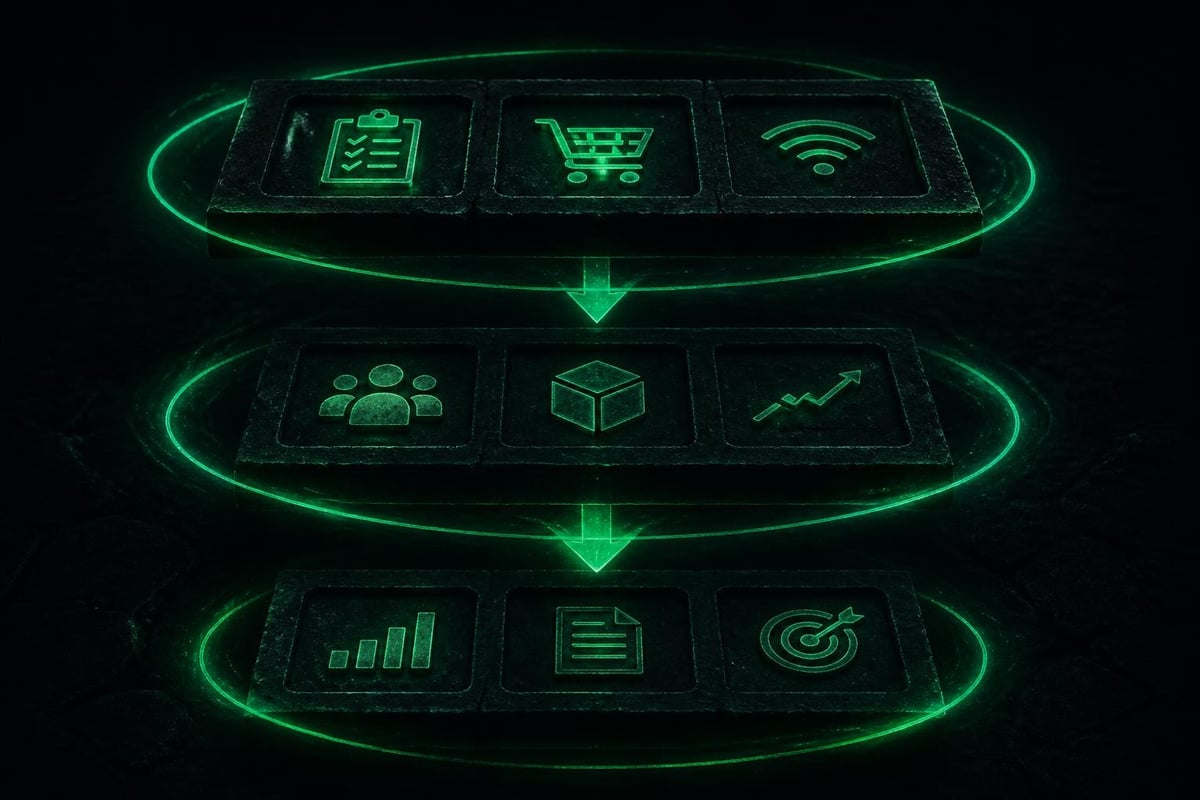
The work splits into three layers:
- Data acquisition: Licensing panel data, scraping public sentiment, running proprietary surveys, buying syndicated research, or instrumenting digital properties to capture first-party signals.
- Analysis and synthesis: Tagging, segmenting, modeling, and summarizing raw signals into trends, personas, journey maps, or predictive scores.
- Delivery and activation: Packaging insight into reports, live dashboards, API feeds, or embedded recommendations inside your CRM, ad platform, or product analytics stack.
Different providers specialize in different parts of this chain. Some are data brokers with light analysis. Others are consultancies that buy commodity data and add expensive interpretation. A few are platforms that let you run the analysis yourself but hand you better pipes and templates than you'd build in-house.
The Promise: Speed and Scale You Can't Match Internally
Hiring a consumer intelligence company makes sense when the alternative is slower and more expensive. If building an in-house consumer research function means six months of hiring, tooling, and trial-and-error, and the window to move is eight weeks, you buy the capability ready-made.
Scale is the other argument. A good provider already has partnerships with data sources you'd spend a year negotiating access to: panel providers, sentiment aggregators, transaction feeds, location data networks. ESOMAR’s Global Market Research 2024 report shows the global market research industry continuing its shift toward tech-enabled, always-on data streams rather than episodic studies – a shift that favors specialists with infrastructure already running.
The edge you're buying:
- Immediate access to broad, structured datasets (panel surveys, sentiment corpora, transactional proxies)
- Pre-built taxonomies and frameworks (segmentation schemes, journey templates, category benchmarks)
- Analysts trained in specific methodologies and verticals, so you're not teaching someone retail economics from scratch
- Continuous updates as consumer behavior shifts, instead of point-in-time snapshots that go stale
This works when your question fits their frame. If you're a CPG brand asking "How is Gen Z snacking behavior shifting?" and the provider already tracks that category, you get an answer this month instead of next year.
The Risk: Renting Someone Else's Strategy
The problem is fit. A consumer intelligence company builds systems to serve many clients, so it optimizes for breadth and repeatability, not the edge case that defines your competitive position. If your advantage depends on understanding a micro-segment, a behavioral nuance, or a geographic pocket that doesn't show up in their panel design, you're working from someone else's map.
Where outsourced intelligence breaks down:
| Risk | Why It Happens | What It Costs You |
|---|---|---|
| Generic segmentation | Provider uses the same persona framework across 50 clients in your category | You optimize for averages, miss the outlier segment where growth is hiding |
| Lagging indicators | Surveys and panels capture stated preference and past behavior, not emerging intent | You see the shift after competitors already moved |
| Methodological lock-in | Switching providers means losing longitudinal comparability, so you're stuck even when the fit degrades | Sunk cost keeps you paying for declining relevance |
| Attribution opacity | You don't control how data was collected, cleaned, or weighted, so you can't audit quality or bias | Decisions rest on a black box you can't interrogate when results don't match reality |
The worst version is when leadership treats the subscription as strategy. "We have a consumer intelligence company" becomes the answer to "How do we know?" – and nobody asks whether the insight is actually shaping decisions or just decorating slide decks.
Build vs. Buy: The Honest Calculus
Building in-house gives you control and specificity. You design the data collection to answer your exact questions. You own the methodology, the refresh cadence, the integration into your decision rhythm. You're not renting someone else's taxonomy.
You should build when:
- Your competitive edge depends on proprietary customer insight that a shared provider can't deliver
- You have the talent and budget to hire researchers, analysts, and engineers who can instrument, model, and operationalize the system
- The ongoing cost of subscription fees and consultancy retainers exceeds the loaded cost of an internal team over three years
- Speed-to-insight matters more than speed-to-start, and you can afford the six-to-twelve-month buildout
Forrester’s analysis of high-performing consumer insights teams highlights that the best functions blend internal research talent with selective vendor partnerships – they own the strategy and questions, rent the infrastructure and panel access.
You should buy when:
- You're entering a new category and need baseline intelligence fast, before committing to a full build
- The questions you're asking are standard enough that an off-the-shelf solution fits (category sizing, sentiment tracking, demographic profiling)
- You lack the budget or timeline to build, and the alternative is guessing
- The provider offers access to data sources you'd never negotiate on your own (proprietary panels, transaction feeds, sentiment corpora)
The middle path – platform-assisted build – is where most growth companies land. You use a platform that gives you the pipes (data connectors, dashboards, analysis templates) but lets you define the questions, the segments, the refresh logic. You're not building from zero, but you're not locked into someone else's doctrine either. BrandScout’s approach follows this model on the competitive-intelligence side: it automates discovery and applies proven strategy frameworks, but the analysis stays yours, grounded in your real market data rather than a syndicated feed.
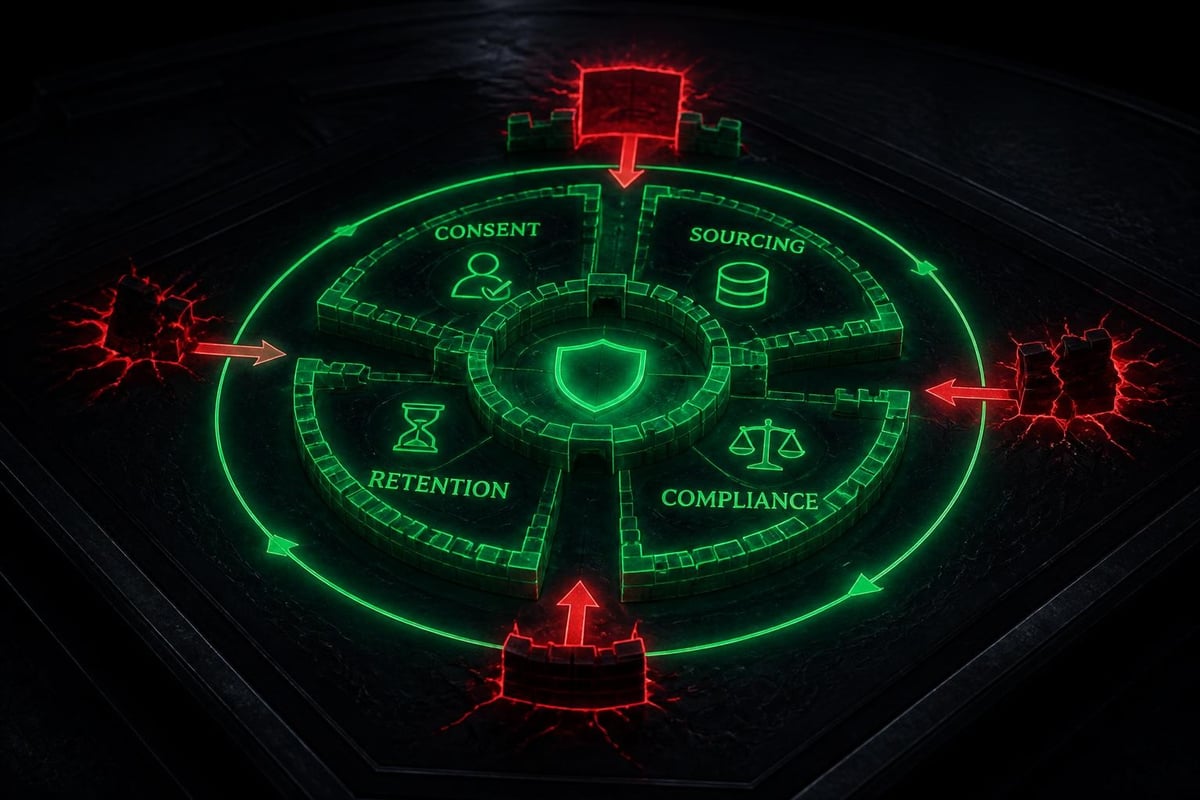
Privacy, Compliance, and the Data-Sourcing Minefield
Consumer intelligence lives or dies on data quality and legal defensibility. In 2026, that means navigating a minefield of privacy regulations, platform restrictions, and enforcement actions that didn't exist five years ago. If your consumer intelligence company is still sourcing data the way it did in 2019, you're inheriting risk.
The landscape:
- GDPR, CCPA, and expanding state laws require explicit consent for most consumer data collection and give users rights to access, delete, and opt out.
- Platform policy changes (iOS ATT, Google's Privacy Sandbox, cookie deprecation) have cut off passive tracking methods that legacy providers relied on.
- Regulatory enforcement is real and escalating. The FTC’s recent actions against data brokers selling sensitive location data show that "everyone does it" is not a defense.
A responsible consumer intelligence company builds compliance into data acquisition from the start: explicit consent, transparent sourcing, documented retention and deletion procedures, regular audits. An irresponsible one treats compliance as a legal footnote and pushes the liability onto you when regulators come asking.
Questions to Ask Before You Sign
Before you commit to a consumer intelligence company, get answers in writing. Not marketing answers – contract-backed answers.
- Data sourcing: Where does the data come from? (Named partners, owned panels, scraped public sources, purchased feeds?) How was consent obtained? Can you audit the source agreements?
- Methodology transparency: What statistical methods are used for segmentation, weighting, trend detection? Can you access the raw data or are you locked into their dashboards?
- Refresh cadence: How often is the data updated? Is it continuous, monthly, quarterly? What's the lag between signal and delivery?
- Competitive overlap: Do they serve your direct competitors? If so, how is your proprietary usage data and strategic context protected?
- Exit terms: If you cancel, do you retain access to historical data? Can you export it in a usable format, or does it vanish?
If the provider won't answer these clearly, they're either hiding something or they haven't thought it through. Either way, you're the one holding the risk.
Integration: The Gap Between Insight and Action
A consumer intelligence company can hand you a perfect report that never changes a single decision. The gap between insight and action is integration: Can the intelligence flow into the tools, rhythms, and people who actually make calls?
Integration failures look like this:
- Research reports land in email, get skimmed in a meeting, then filed in a shared drive nobody searches
- Dashboards require separate logins, aren't mobile-responsive, and don't update fast enough to inform weekly planning
- Segmentation schemes don't match how your CRM or ad platform tags customers, so activation requires manual translation every time
- Analysts speak a different language than product, marketing, and sales – so insight stays theoretical
The best consumer intelligence systems are built backward from decisions. Start with the question: What decision changes if we know X? Then design data collection, analysis, and delivery to land the answer in the right person's workflow at the right time.
Building a Decision-Driven Intelligence System
Whether you build, buy, or blend, the system needs three things to matter:
- Tight feedback loops: Insight arrives fast enough to shape the decision it's meant to inform, not three weeks after you've already moved.
- Embedded delivery: Intelligence shows up inside the tools people already use (CRM, BI dashboards, planning docs, Slack) – not in a separate portal they have to remember to check.
- Shared language: Segmentation, metrics, and frameworks match how the organization already thinks and talks, so adoption is friction-free.
Think with Google’s research on consumer behavior and measurement offers practical case studies of how marketing teams connect insight to execution – not just collecting data, but using it to shift budget, creative, and targeting in real time.
The Build-Your-Own Path: Platforms and Aggregators
If you're not ready to hire a full-service consumer intelligence company but in-house build feels too slow, the middle ground is platform-enabled assembly. You use best-in-class tools for specific jobs – survey platforms, sentiment aggregators, analytics engines – and stitch them together with your own logic.
Common stack components:
- Survey and panel tools: Qualtrics, SurveyMonkey, Typeform for owned research; Cint, Lucid, Dynata for access to consumer panels
- Social and sentiment: Brandwatch, Sprout Social, Mention for tracking brand and category conversation across platforms
- Behavioral and transactional: Google Analytics, Segment, Mixpanel for digital behavior; second-party data partnerships for offline signals
- Analysis and BI: Tableau, Looker, Mode for dashboarding; Python/R environments for custom modeling
The advantage is control and cost. You pay for exactly what you use, you own the data and methodology, and you can swap components without losing the whole system. Research World’s summary of evolving market-research methods highlights this shift – fewer monolithic vendors, more modular stacks that teams assemble and manage themselves.
The disadvantage is overhead. You're now responsible for integration, uptime, training, and governance. If three tools break or update their APIs in the same quarter, you're the one fixing it. For lean teams, that tax can outweigh the cost savings.
Enterprise vs. Startup: Different Needs, Different Fits
The right consumer intelligence company for a Fortune 500 CPG brand is the wrong choice for a Series A SaaS startup. Needs, budgets, speed, and risk tolerance are different.
Enterprise Requirements
Large organizations need:
- Scale and coverage: Intelligence across dozens of categories, geographies, and customer segments
- Longitudinal consistency: The ability to compare trends year-over-year without methodology changes breaking continuity
- Compliance and audit trails: Documented data sourcing, consent management, and governance to satisfy legal and procurement
- Integration with legacy systems: Feeds into SAP, Salesforce, Adobe, and entrenched BI stacks
- Account management and training: Dedicated support to onboard teams, customize dashboards, and translate insight into internal language
Deloitte’s Digital Consumer Trends preview for 2025 shows how large enterprises are investing in AI-enabled consumer analytics and real-time behavioral signals to stay competitive – infrastructure-heavy approaches that require serious vendor partnerships.
| Enterprise Need | Typical Solution | Annual Cost Range |
|---|---|---|
| Multi-market consumer segmentation | Full-service agency + syndicated panel access | $500K–$2M+ |
| Always-on sentiment and brand tracking | Managed platform (Brandwatch, Talkwalker) with analyst support | $150K–$500K |
| Proprietary consumer panel | Custom-recruited panel + quarterly wave studies | $300K–$1M+ |
Startup and Scale-Up Requirements
Early-stage and growth companies need:
- Speed: Answers in days or weeks, not quarters
- Focus: Deep insight on a narrow segment or category, not broad coverage
- Affordability: Solutions in the $10K–$100K range, not half-a-million-dollar commitments
- Flexibility: The ability to pivot questions and methodology as the business model evolves
- Self-service: Minimal hand-holding, intuitive interfaces, fast onboarding
For startups, the best "consumer intelligence company" is often a platform that automates the grunt work and lets you run the strategy yourself. On the competitive side, that's where tools like BrandScout’s Competitive Analysis & Strategy fit: it runs proven frameworks (PESTEL, Five Forces, SWOT) automatically, generates strategic options, and delivers a 90-day plan grounded in your real data – without the six-month consultancy engagement.

When to Fire Your Consumer Intelligence Company
Relationships with consumer intelligence providers degrade slowly. Usage drops, reports go unread, renewal conversations feel like inertia rather than value. Here's when to cut it:
You should exit when:
- Insight no longer shapes decisions: If the last three strategy reviews didn't reference the research, you're paying for decoration.
- Methodology hasn't evolved: Markets and consumer behavior shift; if your provider is still running 2022 playbooks in 2026, they're behind.
- Cost per insight is climbing: Fewer people use it, but the contract auto-renews at higher rates – classic subscription trap.
- You've outgrown the fit: Early-stage tools don't scale to enterprise complexity; enterprise vendors don't bend to startup speed. Graduating is normal.
- Compliance risk is rising: If your provider can't document clean data sourcing and consent in 2026, the regulatory risk is yours.
Firing a vendor is cheaper than ignoring sunk cost. The question isn't "How much have we invested?" – it's "Does this make next quarter's decisions better?" If the answer is no, move.
The Hybrid Future: Platforms That Teach You to Think
The best consumer intelligence companies in 2026 aren't just data pipes – they're teaching systems. They automate the tedious work (data collection, cleaning, dashboarding) and use that efficiency to make the strategic work easier to learn and execute.
Instead of handing you a 50-slide deck, they show you how the segmentation was built, why certain signals matter, what trade-offs exist in the methodology. They make you better at asking the next question, not just answering the last one.
This is the shift from vendor to capability partner. You're not outsourcing intelligence – you're augmenting your team's ability to generate it. Over time, dependency drops, competence rises, and the platform becomes scaffolding for internal expertise rather than a crutch.
The same principle applies on the competitive-intelligence side. Platforms that map your competitive landscape, run proven strategic frameworks, and generate actionable battlecards aren't replacing your strategic thinking – they're making it faster, more rigorous, and grounded in real data instead of guesswork.
A consumer intelligence company is only as valuable as the decisions it changes. If you're paying for reports that gather dust, dashboards nobody checks, or insights that arrive too late to matter, you're renting a liability. The right move depends on fit: your speed, your budget, your competitive edge, and whether you need breadth or depth. Build when proprietary insight is your moat. Buy when speed and scale trump control. Use platforms when you want the infrastructure without the overhead. Brandscout takes the same approach on competitive intelligence – giving you the discovery, analysis, and strategy frameworks that make smart decisions faster, without locking you into someone else's doctrine.