Market Intelligence Analyst: What They Do in 2026
The market intelligence analyst occupation changed substantially between 2023 and 2026. What used to center on aggregating competitor press releases and quarterly reports now demands real-time synthesis across dozens of signal types, analytical frameworks that deliver strategic recommendations rather than passive dashboards, and the judgment to separate noise from insight when AI surfaces everything. The analyst who succeeds in this environment does different work than their 2020 counterpart, uses different tools, and faces different competitive pressure from automation.
What a Market Intelligence Analyst Actually Does Now
A market intelligence analyst transforms scattered market signals into structured intelligence that drives decisions. That's the core function, but the execution changed.
Primary Responsibilities in 2026
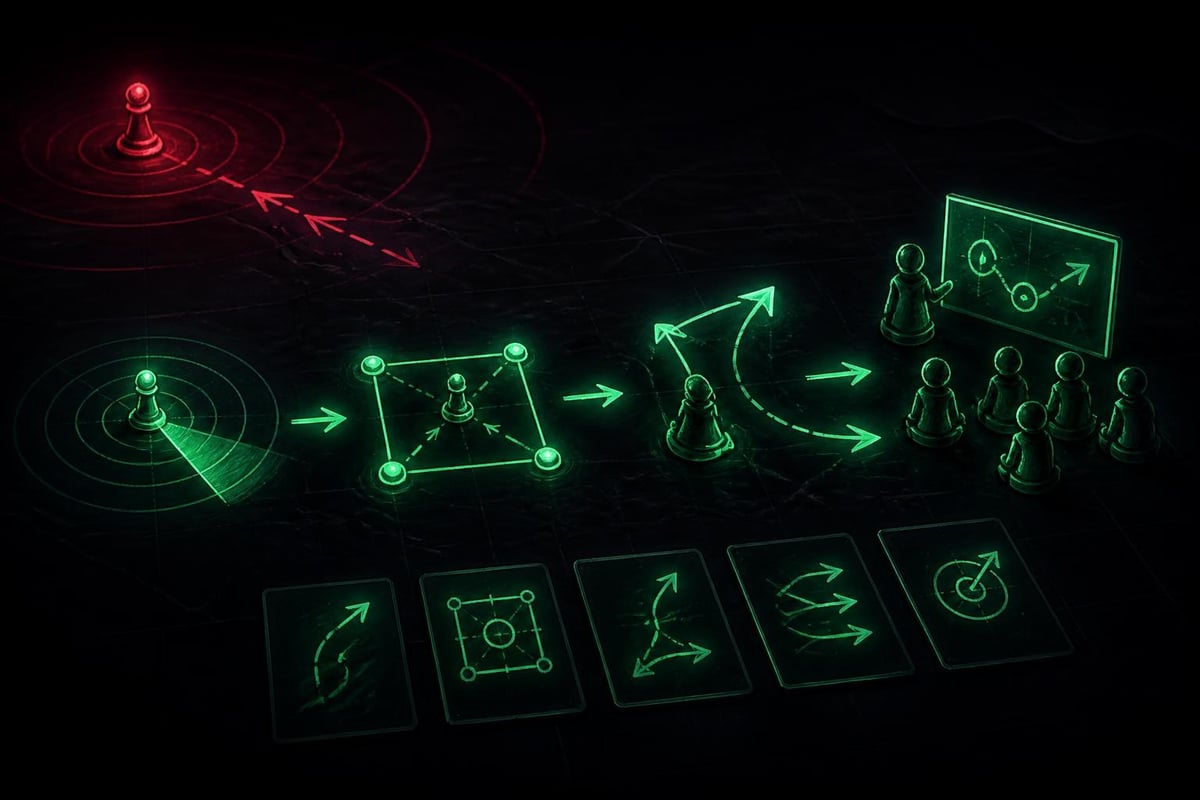
The work breaks into three layers: collection, analysis, and activation. Collection means identifying which signals matter for your competitive context, monitoring them continuously, and structuring the intake so patterns emerge rather than drowning in volume. Analysis means running proven frameworks against that data to surface strategic implications. Activation means translating findings into specific plays your team can execute.
Daily tasks typically include:
- Monitoring competitor product launches, pricing changes, messaging shifts, and hiring patterns
- Tracking regulatory developments, economic indicators, and technological changes that reshape competitive dynamics
- Running SWOT, PESTEL, or Porter's Five Forces analyses when new intelligence arrives
- Building and maintaining competitive databases that connect fragmented insights
- Briefing leadership on threats, opportunities, and recommended responses
- Creating battlecards, positioning documents, and strategic playbooks
The market intelligence analyst job description evolved substantially as AI automated data collection but increased the demand for strategic synthesis. You're paid for judgment, not gathering.

What Changed From Five Years Ago
The analyst role in 2021 involved significant manual work: subscribing to competitor newsletters, tracking their social accounts, reading industry reports, compiling everything into quarterly presentations. That consumption-and-reporting model broke when signal volume exploded and leadership demanded faster cycles.
By 2026, three shifts redefined the work:
AI handling collection. Tools now surface competitor changes, market shifts, and emerging threats automatically. The analyst curates and validates rather than manually hunts. This freed capacity but raised the bar on synthesis.
Frameworks becoming executable. SWOT used to produce a four-quadrant slide. Now leadership expects that analysis to end in a 90-day plan with specific attack or defense strategies derived from your competitive position. Tools like Brandscout’s Competitive Analysis & Strategy automate this translation, running proven frameworks and generating actionable plays grounded in your real data.
Speed replacing depth. Markets move faster. A thorough monthly report matters less than a brief daily synthesis that catches threats early. The cadence compressed.
Skills That Separate Good Analysts From Replaceable Ones
Not every capability matters equally. Some skills AI replicated; others became more valuable.
Core Competencies That Still Matter
| Skill Category | Why It Matters in 2026 | What Gets Tested |
|---|---|---|
| Strategic frameworks | AI can run SWOT, but you decide which framework fits the question and interpret the output | Whether you choose the right lens for the problem |
| Business acumen | Understanding why a competitor's pricing change threatens your position requires knowing how markets actually work | Connecting dots AI doesn't see |
| Communication | Intelligence unused is intelligence wasted; you must brief executives clearly | Whether leadership acts on your findings |
| Data literacy | You're validating AI outputs, spotting patterns in messy datasets, and questioning conclusions | Whether you catch errors machines make |
The skills necessary for market research roles include statistical analysis and survey design, but market intelligence leans heavier on competitive strategy and business judgment. The disciplines overlap but optimize for different outputs.
What AI Can't Replace Yet
Pattern recognition across unstructured signals requires context machines lack. When a competitor hires a VP of Enterprise Sales after three years focused on SMB, that signals a strategic shift. But which shift? Geographic expansion? Upmarket positioning? Desperation because SMB economics failed? The analyst provides the context that turns a data point into insight.
Judgment under ambiguity separates survivors from casualties. When you have incomplete information and leadership wants a recommendation, you're paid to make the call and explain your reasoning. AI suggests options; you choose the play.
Irreplaceable human skills:
- Reading competitive intent from indirect signals
- Knowing which threats demand immediate response versus monitoring
- Translating analysis into language executives trust
- Building relationships that surface intelligence sensors miss

How the Hiring Market Shifted
Demand for market intelligence analysts grew between 2023 and 2026, but the job description diverged from traditional market research. Companies want strategic thinkers who operate tools, not researchers who manually compile reports.
What Employers Actually Want
Job postings in 2026 emphasize different qualifications than five years prior. Educational background matters less than demonstrated ability to generate actionable intelligence. Certifications carry less weight than portfolio examples showing you turned messy competitive data into a strategic play that worked.
Research on labor market demands and skill extraction using natural language processing reveals that employers increasingly specify tools and frameworks by name rather than generic "analytical skills." You're expected to know SWOT, Porter's Five Forces, PESTEL, and Ansoff matrices as applied instruments, not theoretical concepts.
- Framework fluency. Can you run proven strategic analyses and extract implications?
- Tool proficiency. Platforms that automate collection and analysis replaced manual methods. Employers want analysts who leverage these tools rather than resist them.
- Speed of synthesis. Time from signal to recommendation matters. The analyst who delivers a decent brief today beats the one who delivers a perfect report next week.
- Cross-functional translation. Your intelligence serves product, marketing, sales, and executive teams. Each needs different formats and emphasis.
Salary and Career Trajectory
Compensation depends heavily on whether you generate strategic value or simply aggregate information. Analysts who produce passive reports command $60,000 to $85,000. Those who generate competitive strategies and influence major decisions earn $95,000 to $140,000. The spread widened as automation commoditized the lower end.
Career paths split into two directions: deeper specialization in competitive strategy (leading to Chief Strategy Officer or VP Strategy roles) or broader general management (where intelligence work becomes one competency among several). The specialist path pays more but offers fewer seats.
The Tools and Methods That Define the Work
The technology stack for market intelligence changed completely between 2021 and 2026. Manual methods don't scale; AI-powered platforms replaced spreadsheets and slide decks.
The Old Stack vs. The New Reality
| Function | 2021 Method | 2026 Solution |
|---|---|---|
| Competitor tracking | Browser bookmarks, email alerts, manual checks | AI-powered discovery and monitoring |
| Data organization | Spreadsheets, shared drives | Structured competitive intelligence databases |
| Analysis | Manual framework application, consultant decks | Automated framework execution with strategic outputs |
| Distribution | Email reports, quarterly presentations | Living dashboards, automated briefs, integrated playbooks |
Platforms that map competitive landscapes and run strategic frameworks automatically changed what "doing the work" means. The market intelligence analyst now spends less time collecting and more time validating, interpreting, and activating.
Framework Application in Practice
Strategic frameworks used to be workshop exercises. In 2026, they're operational tools applied continuously.
SWOT analysis identifies your competitive position relative to rivals. But stopping at the four quadrants wastes the exercise. The valuable output is the strategy that emerges: which strengths you exploit, which weaknesses you shore up, which opportunities you pursue, which threats you counter. Understanding SWOT as an active tool rather than a reporting template separates analysts who influence decisions from those who populate slides.
Porter's Five Forces reveals where competitive pressure comes from: rival intensity, supplier power, buyer power, substitution threat, and entry barriers. This framework tells you whether your market favors incumbents or invites disruption. For market intelligence analysts, the application isn't describing the five forces but quantifying how they shifted and what strategic response that shift demands.
PESTEL (Political, Economic, Social, Technological, Environmental, Legal) catches macro forces before they hit your quarterly results. Analysts who monitor these vectors early give leadership time to adapt rather than react.
Common Mistakes That Tank Analyst Effectiveness
Even experienced analysts make errors that undermine their impact. Most failures aren't about skill but about misunderstanding what the role actually delivers.
Collecting Without Synthesizing
The worst trap is confusing activity with value. Monitoring 50 competitors, compiling weekly reports, and maintaining massive databases feels productive. But if none of it changes what your company does, you're producing waste.
Intelligence only matters when it alters decisions. The analyst who tracks fewer competitors but identifies the one existential threat and builds the counter-strategy delivered more value than the one with comprehensive coverage and no recommendations.
Chasing Perfection Over Timeliness
Markets move faster than research cycles. Waiting for complete information before briefing leadership means arriving after the window closed. The analyst's job includes making calls with incomplete data and updating as clarity improves.
A 70% confident recommendation delivered Monday beats a 95% confident one delivered Friday when the competitor launches Thursday. Speed compounds in competitive environments.
Ignoring the Activation Layer
Analysis that doesn't convert into action wastes everyone's time. This means your deliverable isn't the insight itself but the play your team can execute. Instead of "Competitor X is expanding into enterprise," the useful output is "Competitor X hired three enterprise AEs and launched an upmarket tier. We should counter by accelerating our own enterprise features and running comparison campaigns before they establish credibility. Here's the 30-day plan."
Building effective battlecards exemplifies activation: taking competitive intelligence and packaging it so your sales team wins deals they would have lost.
How AI Changed the Analyst's Actual Work
Automation didn't eliminate the market intelligence analyst role. It changed which tasks matter and which capabilities differentiate you.
What AI Actually Does Well
AI excels at volume, pattern detection across large datasets, and consistent application of defined processes. For market intelligence, this means:
- Monitoring hundreds of competitors simultaneously and surfacing meaningful changes
- Scanning job postings, product updates, pricing changes, and executive movements
- Running standard frameworks (SWOT, PESTEL, Porter's Five Forces) against structured data
- Generating initial strategy drafts based on competitive positioning
Studies on AI-powered labor market analysis demonstrate how machine learning can process real-time job market data and extract strategic signals about industry shifts. The same techniques apply to competitive intelligence: AI identifies patterns humans would miss in manual review.
Research on topic-based classification for analyzing hiring trends among major companies shows how AI can track competitor strategy through their talent acquisition. A market intelligence analyst in 2026 leverages these outputs rather than manually tracking every job posting.
What Still Requires Human Judgment
AI provides inputs; analysts make decisions. The technology can flag that three competitors raised prices within two weeks. The analyst determines whether that represents coordinated positioning, cost pressure across the industry, or isolated choices requiring different responses.
Critical human functions in 2026:
- Choosing which frameworks apply to which questions. Not every situation needs Porter's Five Forces.
- Interpreting ambiguous signals. When competitor behavior contradicts their stated strategy, what does that reveal?
- Weighing trade-offs. Every strategic choice involves sacrifices. AI suggests options; you evaluate which costs are acceptable.
- Building credibility with leadership. Executives trust people, not algorithms. Your judgment and track record matter.
The market intelligence analyst who treats AI as a research assistant rather than a threat multiplies their output. The one who competes with automation on tasks machines do better loses.
The Organizational Challenges Analysts Navigate
Technical skills matter, but organizational dynamics determine whether your intelligence actually influences decisions. The best analysis fails if you can't navigate politics, earn trust, and time your interventions.
Getting Leadership to Act on Intelligence
You can surface the perfect competitive threat and watch leadership ignore it. Why? Because you didn't build the relationship that makes them listen, or you delivered the insight without the recommended response, or you've been wrong too many times and burned credibility.
Tactics that work:
- Brief executives in their language, not yours. Sales cares about deals at risk. Product cares about feature gaps. Tailor the message.
- Lead with the recommendation, not the data. They want to know what to do, then why, then the supporting evidence.
- Establish a track record of accurate calls. Credibility accumulates from being right repeatedly.
- Provide options with trade-offs clearly stated. Don't just push one answer.
Studies on advanced job candidate matching systems reveal how data analysis enhances decision-making when paired with clear recommendations. The same principle applies to competitive intelligence: analysis alone doesn't drive action; analysis paired with clear next steps does.
Multi-Brand Complexity
Agencies, holding companies, and enterprises with multiple divisions face a specific challenge: repeating competitive intelligence work across every brand. The market intelligence analyst at a single-brand company can focus depth on one competitive landscape. The analyst supporting ten brands drowns in redundancy.
Platforms that solve scale problems, managing competitive intelligence across multiple brands from one account, let analysts maintain depth without multiplying workload. This architectural choice determines whether you can support growth or become a bottleneck.
When the Analyst's Warning Gets Ignored
You'll brief leadership on a competitor threat. They'll nod. Nothing will happen. Three months later, the threat materializes and everyone acts surprised. This pattern kills analyst morale and organizational effectiveness.
Why it happens:
- Your recommendation required difficult trade-offs leadership didn't want to make
- The insight arrived too early; the pain wasn't acute yet
- You lacked political capital with the decision-maker
- Competing priorities consumed all available resources
The mature analyst understands that being right doesn't guarantee being heard. You document the warning, update as the situation evolves, and resurface the intelligence when the organization becomes ready to act.
The Emerging Specializations Within Market Intelligence
The market intelligence analyst role is fragmenting into subspecialties as markets grow more complex and tools enable deeper focus.
Vertical-Specific Intelligence
Healthcare market intelligence requires different frameworks and signals than SaaS or consumer goods. The analyst who develops domain expertise in regulatory environments, reimbursement models, and clinical validation timelines can't easily transfer that knowledge to e-commerce.
Specialization pays. Generalist analysts command lower salaries and face more competition. Specialists who understand both intelligence frameworks and the specific competitive dynamics of their vertical become irreplaceable.
Real-Time Competitive Response
Some analysts focus entirely on speed: detecting competitor moves within hours and generating immediate counter-strategies. This subspecialty serves fast-moving markets where late response means lost opportunity.
The skillset emphasizes rapid synthesis, pre-built playbooks, and strong executive relationships that enable fast decisions. You're optimizing for speed over completeness.
Strategic Positioning and Doctrine
The analyst who moves beyond reporting into strategic design works differently. You're not just tracking competitors; you're architecting your company's competitive stance and choosing which doctrines to deploy.
This work requires understanding both the frameworks (SWOT, Porter's Five Forces, PESTEL) and the strategic options those frameworks reveal. How competitive positioning shapes marketing decisions determines whether your intelligence translates into market advantage.
The market intelligence analyst who survives and thrives in 2026 synthesizes faster, chooses frameworks deliberately, and converts intelligence into plays leadership can execute. The role demands less collection and more judgment as AI handles volume but can't replace strategic thinking. If you're building competitive intelligence capabilities or need to move from scattered signals to structured strategy, Brandscout automates the frameworks and surfaces the plays so you focus on the decisions that matter.