Competitive Monitoring: Map Markets, Track Threats, Win
Most businesses discover their competitors made a move after the damage is done. A new feature ships. Pricing changes overnight. A campaign lands that repositions the category. You're left reacting instead of anticipating, defending ground you didn't know was contested. Competitive monitoring fixes this: it's the systematic tracking of competitor actions so you can read the field before moves become threats. Done right, it turns scattered signals into structured intelligence that keeps you ahead.
What Competitive Monitoring Actually Does
Competitive monitoring is the continuous collection and analysis of competitor activity across channels, products, messaging, pricing, hiring, and market behavior. It's not a quarterly audit or a folder of screenshots. It's a living system that routes relevant signals to the people who need them when decisions still matter.
The work breaks into three layers:
- Signal capture: tracking what competitors say, launch, change, or announce
- Pattern recognition: identifying what those signals mean for your position
- Distribution: getting insights to the right teams before the window closes
Without all three, you're either drowning in noise or missing the moves that count. Effective competitive monitoring requires both breadth (what you track) and speed (how fast it reaches decision-makers).
Why Most Monitoring Fails
The failure mode is predictable. Teams start with good intentions: spreadsheets, bookmarks, Slack channels labeled "competitor intel." Within weeks, the system collapses under its own weight. Updates stop. Tabs multiply. Nobody knows what's current.
The problem isn't effort. It's structure. Manual monitoring doesn't scale past two or three competitors, and even then it's fragile. One person leaves, the system dies. A new rival emerges, and it takes weeks to catch up.
| Common Failure | Why It Happens | What Breaks |
|---|---|---|
| Spreadsheet tracking | Manual updates don't happen consistently | Data goes stale in days |
| Alert fatigue | Too many irrelevant signals | Teams ignore everything |
| No clear owner | "Everyone's job" becomes no one's job | System abandoned in weeks |
You need infrastructure that survives turnover, absorbs new competitors automatically, and filters noise before it reaches humans.

What to Monitor and Why It Matters
Not all signals carry the same weight. A blog post isn't the same threat as a pricing change. A LinkedIn hire means less than an executive departure. Effective competitive monitoring prioritizes what predicts moves over what's merely visible.
Product and Feature Launches
New features reveal where competitors think the value is shifting. A messaging pivot suggests they've found friction in their current positioning. Integration announcements show partnership strategy and ecosystem expansion.
Track:
- Release notes and changelogs
- Product hunt launches
- Integration announcements
- Deprecated features (what they're walking away from)
Pricing and Packaging Changes
Pricing signals desperation or confidence. A price cut under pressure means they're fighting for volume. New tiers suggest they've identified underserved segments. Bundling changes show where they see leverage.
Watch for:
- Published pricing page updates
- New plan structures
- Free tier adjustments
- Contract term changes
Messaging and Positioning Shifts
How competitors describe themselves tells you what they believe works. Homepage rewrites indicate repositioning. Case study themes reveal target personas. Ad creative shows what resonates enough to fund.
Monitor:
- Homepage hero copy changes
- Value proposition evolution
- Case study publication patterns
- Paid ad creative and targeting
Hiring and Organizational Moves
Personnel signals intent before public launches. Sales hires in new regions telegraph expansion. Engineering concentration in specific domains predicts product direction. Executive departures create windows of weakness.
- Track LinkedIn job postings for role concentration
- Monitor leadership changes through press releases
- Note geographic expansion patterns through hiring
- Follow acquisition rumors and confirmations
Understanding competitive intelligence means knowing which signals predict strategic shifts versus routine operations.
Building a System That Actually Works
A functioning competitive monitoring system requires four components: defined scope, automated collection, smart filtering, and distribution paths. Each one fails independently if built wrong.
Define Your Monitoring Scope
Start with the competitors who can actually hurt you. That's not "everyone in the category." It's the three to five companies fighting for the same customers with similar approaches. The rest are noise until they cross a threshold.
Your core monitoring list should include:
- Direct competitors (same solution, same buyer)
- Positional threats (different solution, same outcome)
- Emerging challengers (small now, growing fast)
If you're tracking more than eight competitors actively, you're monitoring the category, not the battlefield. Narrow it. BrandScout’s Competitor Discovery & Tracking helps identify which competitors actually matter by surfacing who's rising in your specific category, not just who's loud.
Automate Signal Collection
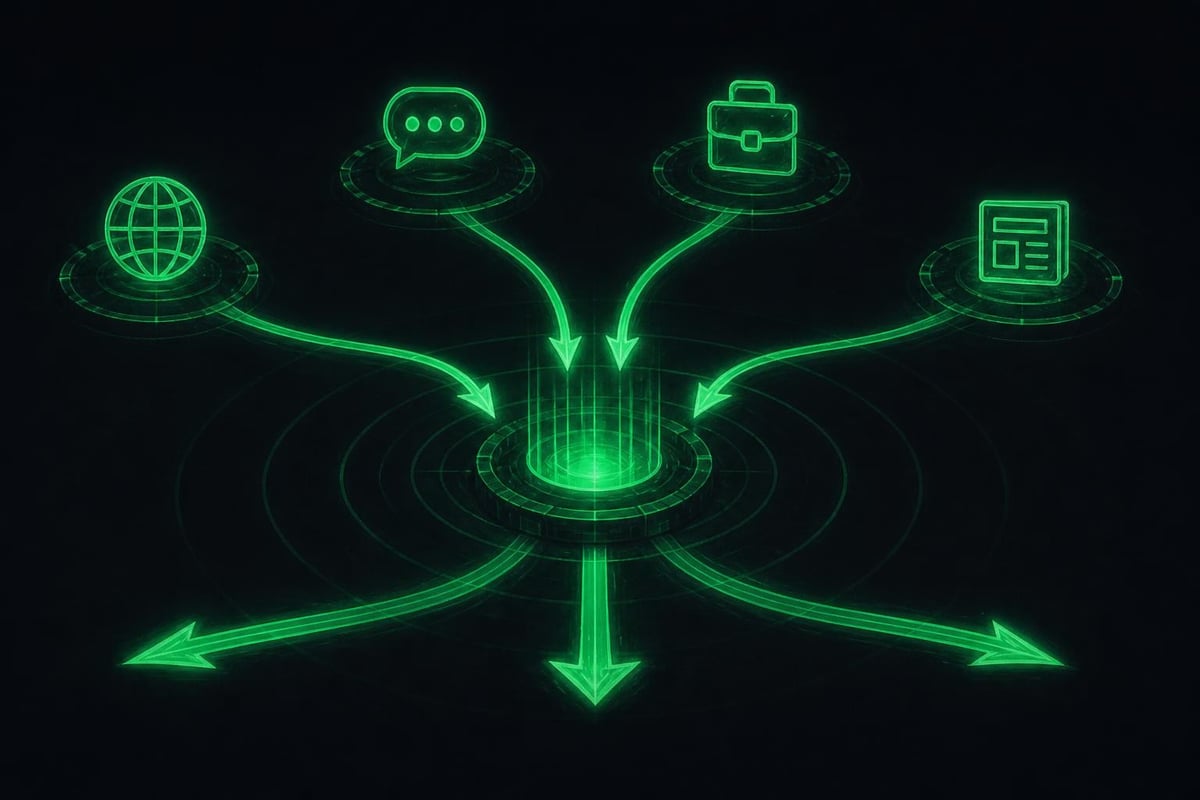
Manual tracking dies the moment priorities shift. Automation keeps the system alive through distraction, turnover, and busy quarters. The right tools track changes across web properties, social channels, job boards, and news sources without human intervention.
Set up automated monitoring for:
- Website changes (pricing pages, feature pages, homepages)
- Social media activity (LinkedIn, Twitter, company blogs)
- Job posting patterns (roles, locations, volume)
- News mentions and press releases
- Product review sites and G2/Capterra updates
Modern competitive monitoring relies on tools that reduce manual effort without sacrificing relevance.
Filter for Strategic Relevance
Raw signals overwhelm. A competitor's blog post about office snacks doesn't matter. Their pricing page rewrite does. Filtering separates what's actionable from what's ambient.
Build filters that flag:
- Changes to pricing or packaging
- New feature launches in your core areas
- Messaging shifts that reposition against you
- Geographic or vertical expansion
- Executive team changes
The goal isn't to see everything. It's to see what changes your next decision.
Route Insights to Decision-Makers
Intelligence that doesn't reach the right person at the right time is just trivia. Competitive monitoring only works if insights land with the teams who can act on them before the window closes.
| Signal Type | Who Needs It | Why It Matters |
|---|---|---|
| Pricing change | Sales, leadership | Affects deal strategy immediately |
| Feature launch | Product, marketing | Informs roadmap and positioning |
| Messaging shift | Marketing, brand | Reveals repositioning opportunity |
| Executive hire | Leadership | Signals strategic direction |
Distribution can't be "send a weekly email everyone ignores." It needs to be integrated into existing workflows where decisions already happen.
Turning Monitoring Into Strategic Moves
Data collection isn't the end goal. The purpose of competitive monitoring is better decisions: knowing when to accelerate, when to pivot, when to defend, when to ignore. Raw signals only matter when they change what you do next.
Early Threat Detection
Competitive monitoring buys you time. A competitor testing new messaging in ads means they're preparing a repositioning. Job postings for enterprise sales in your region mean expansion is coming. Product updates in adjacent categories suggest they're looking for new growth vectors.
Spotting these moves early gives you options: adjust positioning before they land, accelerate roadmap items to beat them to market, or prepare counter-messaging that blunts their advantage.
Competitive Battlecards That Stay Current
Sales teams lose deals when their competitive intelligence is months old. Monitoring keeps battlecards accurate by flagging when competitor strengths, weaknesses, or messaging changes invalidate old talking points.
Instead of annual battlecard rewrites, monitoring triggers updates when:
- Pricing structures change
- New features launch
- Customer reviews surface new objections
- Messaging repositions against you
Strategic Framework Application
The best competitive monitoring doesn't stop at "here's what changed." It connects those changes to strategic implications using proven frameworks. Porter’s Five Forces helps interpret whether new entrants weaken your position. SWOT analysis maps how competitor moves create threats or reveal weaknesses you can exploit.
When a competitor drops pricing, that's a signal. Whether it represents a threat, an opportunity, or desperation depends on context only frameworks provide.
Common Monitoring Mistakes and How to Avoid Them
Even teams committed to competitive monitoring make predictable errors that waste effort and miss threats. Recognizing these patterns early saves months of wasted work.
Monitoring Too Many Competitors
Watching twenty competitors means you're effectively watching none. Attention diffuses. Updates slow. Nothing gets deep analysis. Pick the three to five that can actually take your customers or block your growth, and go deep on those.
Collecting Without Analyzing
A database full of competitor signals you never review is surveillance, not intelligence. The work isn't capturing data. It's interpreting what it means for your position and what you should do differently.
No Clear Distribution Path
Intelligence locked in a dashboard nobody checks might as well not exist. Build distribution into existing workflows: Slack channels people actually read, CRM notes that surface in deal reviews, roadmap discussions that reference competitive context.
Ignoring Second-Order Effects
A competitor launching a feature doesn't just affect your product roadmap. It changes how buyers evaluate the category, what sales objections you'll face, and which partnerships become strategic. Effective competitive intelligence traces the full chain of implications, not just the immediate move.

Choosing the Right Competitive Monitoring Tools
Manual tracking breaks at scale. The right tools extend what one person can monitor from three competitors to dozens, and they filter noise so only relevant signals surface. Competitive intelligence tools in 2026 range from simple web change trackers to full platforms that automate collection, analysis, and distribution.
What to Look for in Monitoring Tools
Automated data collection across web properties, social channels, news sources, and job boards. If you're copy-pasting competitor updates into spreadsheets, you're using 2018 methods in 2026.
Smart filtering that separates strategic signals from noise. A competitor's social media post about their team retreat doesn't matter. Their pricing page rewrite does.
Integration with existing workflows so insights reach decision-makers where they already work: Slack, CRM, project management tools, not another dashboard to check.
Historical tracking that shows changes over time, not just current snapshots. Understanding how a competitor's messaging evolved reveals strategic direction better than today's homepage alone.
From Monitoring to Strategy
The best tools don't stop at alerts. They connect signals to strategic frameworks and generate options. Best practices for competitive monitoring emphasize reducing the gap between "we detected this" and "here's what we should do about it."
A platform like BrandScout bridges that gap by running proven frameworks automatically when new competitive signals arrive, turning monitoring into strategic recommendations instead of just another data source to interpret manually.
How High-Growth Companies Use Competitive Monitoring
Companies that outpace their markets don't just track competitors. They use monitoring to inform every major decision: which features to prioritize, how to position new products, where to expand, and when to defend versus attack.
Product and Roadmap Decisions
When competitors ship features in specific areas repeatedly, that's a signal about where buyer demand is concentrating. Monitoring helps product teams distinguish between chasing features and identifying genuine market shifts worth addressing.
The question isn't "should we copy this feature?" It's "does this pattern suggest the category is moving in a direction we need to account for?"
Pricing and Packaging Strategy
Competitive monitoring reveals how pricing structures evolve across the category. When multiple competitors introduce new tiers, expand free offerings, or bundle features differently, it suggests buyers are signaling new expectations.
Instead of reacting to individual competitor moves, monitoring the pattern helps you position pricing strategically: where to compete directly, where to differentiate, and which segments to own versus concede.
Sales Enablement and Win Rates
Sales teams need current intelligence, not quarterly reports. Competitive monitoring keeps enablement materials accurate by flagging when competitor positioning, pricing, or products change in ways that affect deal strategy.
When win rates drop against specific competitors, monitoring helps diagnose why: did they change pricing, launch a feature that neutralizes your advantage, or shift messaging that repositions you unfavorably?
Market Expansion and Entry Decisions
Before entering a new geography or vertical, monitoring reveals who's already there, how they position themselves, and whether the market is open or defended. Understanding your strategic position relative to entrenched players determines whether expansion makes sense or wastes resources fighting uphill.
Connecting Monitoring to Execution
Competitive monitoring is worthless if it doesn't change what you do. The purpose isn't awareness. It's advantage. That requires connecting intelligence to execution: roadmap decisions, campaign adjustments, pricing changes, messaging pivots.
Building a Competitive Response Process
When monitoring surfaces a significant competitor move, you need a documented process that moves from detection to decision to execution:
- Signal validation: Is this real and confirmed, or speculation?
- Impact assessment: Does this threaten our position or create an opportunity?
- Strategic analysis: What framework explains this move and its implications?
- Option generation: What could we do in response?
- Decision and execution: What will we do, who owns it, and when does it ship?
Without this structure, monitoring becomes a stream of "did you see what they did?" conversations that never turn into action.
Integrating Intelligence Into Planning Cycles
Quarterly planning that ignores competitive context is wishful thinking. Roadmaps that don't account for where competitors are moving assume the market stays frozen. Budgets that ignore competitive threats leave you underfunded when it matters.
Market intelligence integrated into planning means competitive monitoring informs every major allocation: which features get resources, which campaigns get budget, which markets get focus.
Measuring Monitoring Effectiveness
How do you know if competitive monitoring is working? Not by the volume of signals collected, but by the quality of decisions it improves:
- Did we spot threats early enough to respond effectively?
- Did intelligence change our roadmap, pricing, or positioning?
- Did sales win rates improve after updating competitive battlecards?
- Did we avoid costly mistakes by seeing competitor failures first?
If monitoring doesn't visibly improve decisions, it's noise collection, not intelligence.
Competitive monitoring transforms how you read the market: from reacting after competitors move to anticipating threats while you still have time to act. It's the difference between playing defense on every deal and shaping the battlefield on your terms. Brandscout turns scattered competitive signals into structured intelligence and strategic options automatically, so you stop tracking competitors manually and start making decisions with confidence.